
Why Depression Is Common After a Herpes Diagnosis
For many people, hearing the words "you have herpes" can feel life-changing. Even though herpes is one of the most common viral infections in the world, the emotional impact of a diagnosis often extends far beyond the physical symptoms. Many individuals experience sadness, fear, anxiety, shame, and, in some cases, clinical depression during the weeks or months following diagnosis.
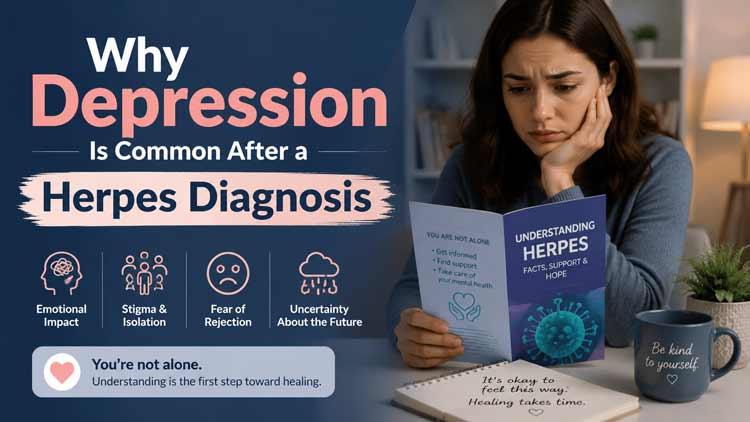
The emotional pain is often far greater than the medical condition itself. Cold sores or genital outbreaks can usually be managed with antiviral medication, but the psychological burden created by social stigma, misinformation, and fear of rejection can be much harder to overcome. Understanding why depression is so common after a herpes diagnosis is the first step toward healing.
Although these feelings are completely understandable, they do not have to define your future. Millions of people living with herpes eventually regain their confidence, enjoy healthy relationships, build families, and lead fulfilling lives. Recovery begins with replacing fear and misinformation with knowledge, self-compassion, and realistic expectations.
The Initial Emotional Shock Can Feel Overwhelming
Receiving a herpes diagnosis often triggers a flood of emotions. Many people describe the experience as similar to grieving. The future they imagined suddenly feels uncertain, even though the diagnosis itself rarely changes their overall health.
During the first few days or weeks, many people experience disbelief. They replay previous relationships in their minds, wondering when they became infected or whether someone intentionally hid their status. Others become consumed with guilt, questioning every past decision and blaming themselves for trusting the wrong person.
This emotional shock happens because the brain interprets unexpected negative news as a significant threat. Stress hormones such as cortisol increase, making it harder to think clearly or regulate emotions. Sleep often becomes difficult, appetite changes, and anxious thoughts may become repetitive.
Some individuals spend hours searching the internet, reading worst-case scenarios that increase fear instead of providing reassurance. Unfortunately, outdated websites and sensational headlines often reinforce the mistaken belief that herpes permanently ruins someone's life.
In reality, the overwhelming emotional reaction usually reflects the surprise of the diagnosis rather than the medical seriousness of the virus.
Society's Stigma Is Often More Painful Than the Virus
One of the biggest reasons depression develops after a herpes diagnosis is stigma. Herpes has become the subject of jokes, television punchlines, and social stereotypes for decades. These portrayals create the false impression that people with herpes are irresponsible, promiscuous, or somehow less worthy of love.
These stereotypes have little basis in reality. Herpes affects people from every background, age group, profession, and relationship status. Someone may contract herpes from their first sexual partner, from a spouse, or even through oral sex during a committed relationship.
Unfortunately, cultural attitudes rarely reflect these facts.
Because of this stigma, many newly diagnosed individuals immediately assume others will judge them harshly. They fear friends will reject them, future partners will leave, or that no one will ever want to date them again.
The anticipation of rejection can be emotionally exhausting, even when no rejection has actually occurred.
Misinformation Makes Depression Worse
Another major contributor to depression is widespread misinformation about herpes.
Many people mistakenly believe that herpes is rare, highly dangerous, impossible to manage, or guarantees lifelong loneliness. None of these beliefs are accurate.
Herpes simplex virus type 1 (HSV-1) and herpes simplex virus type 2 (HSV-2) are extremely common worldwide. Many infected individuals never experience symptoms and may never realize they carry the virus.
Modern antiviral medications significantly reduce outbreaks and lower transmission risk. Many couples maintain healthy long-term relationships where only one partner has herpes. Others eventually marry, have children, and never allow the diagnosis to define their identity.
When someone believes inaccurate information, hopelessness naturally increases. Replacing myths with evidence-based information often leads to immediate emotional relief.
The Fear of Being Rejected Can Feel Devastating
Perhaps the most common fear following diagnosis is the belief that dating is over.
People often imagine having to disclose herpes to every future romantic partner and being rejected repeatedly. Even individuals who have not yet attempted disclosure may assume every conversation will end badly.
This expectation creates anticipatory anxiety. Some stop dating entirely. Others avoid intimacy, cancel social plans, or withdraw from relationships before anyone even has the opportunity to respond.
The irony is that many people living with herpes eventually discover disclosure is far less catastrophic than they initially imagined.
While rejection does happen occasionally, it happens in every dating situation for countless reasons unrelated to herpes. Many potential partners appreciate honesty and are willing to learn about the condition before making decisions.
Fear often grows larger than reality.
Depression Often Develops Because Identity Changes Overnight
A herpes diagnosis can suddenly alter how someone views themselves.
Before diagnosis, a person may have considered themselves healthy, attractive, confident, and carefree. After diagnosis, they may begin defining themselves by a virus rather than by their personality, accomplishments, or relationships.
This identity shift can become dangerous if left unchallenged.
People may begin thinking:
"I'm damaged."
"Nobody will love me."
"I ruined my future."
"I'm different from everyone else."
These thoughts feel convincing because they arise during periods of emotional distress, but they are cognitive distortions rather than objective facts.
Learning to separate personal identity from a medical diagnosis is one of the most important milestones in emotional recovery.
Isolation Can Intensify Emotional Pain
Many people keep their diagnosis completely secret. While privacy is understandable, complete isolation often increases depression.
Without anyone to talk to, individuals may feel they are carrying an unbearable burden alone. Shame grows stronger in silence. The mind begins creating worst-case scenarios that go unchallenged because there is no outside perspective.
Support groups, online communities, trusted friends, therapists, and others living with herpes frequently provide reassurance that recovery is possible.
Simply hearing another person's success story can dramatically change someone's outlook.
Many people discover that they are far from alone. Millions share similar fears, experiences, and eventual recovery.
The Emotional Pain Is Often Similar to Grief
Psychologists frequently compare the emotional adjustment after a herpes diagnosis to grieving a significant life event.
People may cycle through denial, anger, bargaining, sadness, and eventually acceptance.
This process is rarely linear. Someone may feel optimistic one week and discouraged the next, especially after an outbreak or an unsuccessful dating experience.
Understanding that these emotional fluctuations are normal can prevent individuals from believing they are permanently depressed.
Healing usually occurs gradually rather than all at once.
Why Some People Develop Clinical Depression
Not everyone who receives a herpes diagnosis develops clinical depression, but certain risk factors increase vulnerability.
Individuals with a previous history of anxiety or depression may experience stronger emotional reactions. Those without supportive family members or close friends often struggle more during the adjustment period.
A difficult breakup immediately following diagnosis can compound emotional distress. Likewise, discovering herpes after infidelity or betrayal often creates multiple layers of trauma that require time to process.
Persistent sadness lasting more than two weeks, loss of interest in daily activities, severe sleep disturbances, feelings of worthlessness, or thoughts of self-harm should never be ignored. Professional mental health treatment can make a tremendous difference and is an important part of recovery for many individuals.
How Shame and Self-Blame Fuel Depression After Herpes
One of the most damaging emotional reactions after a herpes diagnosis is shame. Unlike many other medical conditions, herpes is often connected in people's minds with personal choices, morality, or character. This connection can create intense self-blame, even when someone did nothing wrong.
A person may find themselves asking painful questions: "How did this happen to me?" "Was I careless?" "Should I have known?" or "Does this mean something bad about who I am?" These thoughts can slowly damage self-esteem and contribute to depressive feelings.
However, having herpes is not a reflection of someone's value, intelligence, cleanliness, or ability to maintain healthy relationships. Viruses do not measure a person's worth. A diagnosis is simply a health condition, not a judgment about someone's character.
Many people contract herpes despite taking precautions, being in committed relationships, or trusting someone they loved. Transmission can happen because many people do not know they carry the virus, symptoms can be mild or unnoticed, and herpes can spread even when no visible outbreak is present.
Replacing self-blame with self-compassion is an important part of emotional recovery. Instead of asking, "What is wrong with me?" a healthier question is, "What support and information do I need to move forward?"
The Impact of a Partner's Reaction After Diagnosis
For many people, the most painful part of a herpes diagnosis is not the diagnosis itself but how someone else responds to it.
Some individuals experience rejection, anger, blame, or abandonment from a romantic partner after sharing their status. When someone they love responds negatively, it can reinforce existing fears and deepen depression.
This is especially difficult when a person believes they contracted herpes from their partner. Instead of receiving understanding and accountability, they may experience denial or accusations. The emotional injury can involve both the diagnosis and the loss of trust in the relationship.
People in this situation often grieve multiple things at once: the relationship they hoped to have, the trust they once felt, and the version of life they imagined before the diagnosis.
It is important to remember that another person's reaction does not determine your worth. Someone's inability to handle a difficult conversation reflects their own knowledge, emotional maturity, and coping abilities. It does not mean you are unlovable or that your future relationships will fail.
Why Herpes Can Trigger Anxiety About the Future
Depression after herpes is often connected with fear about what comes next. The mind naturally tries to predict future danger after a stressful event, but anxiety can turn possibilities into absolute conclusions.
A newly diagnosed person may think:
"I will never find someone again."
"Everyone will reject me."
"My dating life is over."
"Nobody will understand."
These thoughts can feel like facts, but they are predictions created by fear.
The reality is much more balanced. Many people living with herpes have fulfilling romantic relationships. Some partners choose to continue relationships after learning about herpes. Others meet new partners who appreciate honesty and communication.
A diagnosis may change how someone approaches dating, but it does not remove the possibility of love, intimacy, or happiness.
The Connection Between Herpes, Loneliness, and Depression
Loneliness is one of the strongest contributors to depression after a herpes diagnosis. When people feel different from everyone around them, they often withdraw socially.
Some avoid dating because they fear disclosure. Others stop talking to friends because they worry about being judged. Some spend hours reading negative stories online, which can create the impression that every person's experience ends badly.
Social withdrawal may provide temporary relief from anxiety, but over time it can strengthen feelings of hopelessness.
Human beings heal through connection. Talking with someone who understands, whether that is a trusted friend, therapist, support group member, or another person living with herpes, can reduce feelings of isolation.
Many people are surprised by how much comfort comes from hearing someone say, "I felt exactly the same way when I was diagnosed."
How Social Media and Online Searches Can Increase Depression
The internet can be both helpful and harmful after a herpes diagnosis.
Searching for information can help people understand symptoms, treatment options, and transmission risks. However, spending too much time reading frightening posts, outdated information, or extreme stories can increase anxiety and depression.
Online discussions often highlight the most painful experiences because people are more likely to post when they are struggling. Someone who has accepted their diagnosis and is living a normal life may not be posting daily about it.
This creates a distorted picture where negative experiences appear more common than they actually are.
Balanced information is essential. Learning from medical sources, mental health professionals, and supportive communities can help replace fear with realistic expectations.
Rebuilding Confidence After a Herpes Diagnosis
Recovering emotionally from herpes requires rebuilding the way you see yourself.
Many people focus entirely on what herpes has taken away from them. They think about missed opportunities, dating fears, or painful conversations. While those feelings deserve attention, healing also requires recognizing what remains unchanged.
You are still the same person with the same personality, talents, values, memories, and ability to create meaningful relationships.
A herpes diagnosis does not erase someone's attractiveness, kindness, humor, intelligence, or capacity for love.
Confidence often returns when people begin reconnecting with the parts of themselves that existed before the diagnosis. Spending time with supportive people, pursuing hobbies, exercising, building career goals, and practicing self-care can gradually restore a sense of identity.
Learning to Separate Herpes From Your Self-Worth
A common pattern among people experiencing depression after diagnosis is allowing herpes to become their entire identity.
Instead of thinking, "I have herpes," they begin thinking, "I am someone with herpes."
This small language difference represents a major psychological difference.
A medical condition is something you manage. It is not who you are.
People manage many health conditions throughout their lives. Someone with asthma is not defined only by asthma. Someone with diabetes is not reduced to their diagnosis. Similarly, someone with herpes remains a complete person with a full life beyond the virus.
Changing this mindset does not happen instantly, but every step toward self-acceptance weakens the power of stigma.
Healthy Ways to Cope With Depression After Herpes Diagnosis
Emotional recovery usually comes from small, consistent actions rather than one dramatic moment of acceptance.
Learning accurate information about herpes can reduce fear. Understanding how common the virus is, how outbreaks are managed, and how relationships work with herpes can replace uncertainty with confidence.
Talking openly with supportive people can also reduce emotional pressure. Keeping everything hidden often makes shame stronger, while appropriate sharing can create connection.
Maintaining normal routines is another important step. Depression often encourages people to stop doing activities they once enjoyed. Continuing hobbies, work, exercise, friendships, and personal goals helps remind the brain that life continues beyond the diagnosis.
Mindfulness, journaling, therapy, and support communities can also help people process difficult emotions in healthier ways.
When to Seek Professional Help for Depression
Feeling sad or overwhelmed after learning about herpes is common. However, some people experience depression that becomes difficult to manage alone.
Professional support may be helpful if sadness continues for weeks, daily activities become difficult, relationships are affected, or negative thoughts feel impossible to control.
A therapist can help individuals process shame, relationship trauma, fear of rejection, and changes in self-image. Mental health support is not a sign of weakness. It is a practical tool for navigating a difficult emotional transition.
For people experiencing thoughts of self-harm or feeling unable to cope, reaching out for immediate support is especially important. A crisis counselor, mental health professional, or emergency service can provide help during moments of intense distress.
Finding Hope After a Herpes Diagnosis
Although depression after a herpes diagnosis is common, it is important to understand that this emotional state is often temporary. A diagnosis can feel like the end of the life someone imagined, but many people eventually discover that it is only a change in how they approach their health and relationships.
For many individuals, the first stage after diagnosis is dominated by fear. They focus on what might happen, who might reject them, and whether their future will look different. Over time, as they learn more about herpes and meet others who live normal lives with the condition, those fears often become less powerful.
Healing does not mean pretending that herpes is not challenging. It means recognizing that a challenge does not have to become a life sentence of sadness or shame.
Many people eventually reach a point where herpes becomes a small part of their life rather than the center of it. They continue dating, building relationships, pursuing careers, traveling, creating families, and enjoying meaningful experiences.
Herpes Does Not Mean the End of Your Dating Life
One of the strongest beliefs that contributes to depression after a herpes diagnosis is the idea that romantic relationships are no longer possible. This fear is understandable, especially when someone imagines having to disclose their status to future partners.
However, dating with herpes is possible. Many people living with HSV have successful relationships because healthy relationships are built on much more than a person's medical history.
Attraction, emotional connection, trust, shared values, communication, and compatibility remain important factors in relationships. Herpes may become a conversation someone needs to have, but it does not erase all the qualities that make someone a good partner.
Disclosure can feel frightening at first, but many people discover that honest conversations create stronger relationships. A caring partner will usually focus on understanding the situation rather than judging the person.
Some people may choose not to continue after learning about herpes, and that can hurt. But rejection is not proof that someone is undesirable. Dating involves compatibility, and every person, regardless of health status, experiences rejection at some point.
Changing the Way You Talk to Yourself After Diagnosis
The internal conversation someone has after a herpes diagnosis can strongly influence emotional recovery.
Depression often creates harsh self-criticism. A person may repeatedly tell themselves that they are damaged, unlucky, or impossible to love. These thoughts can become automatic, but they can also be challenged.
Instead of saying, "My life is ruined," a healthier perspective may be, "I am going through a difficult adjustment, but I can learn how to manage this."
Instead of thinking, "Nobody will want me," consider, "Some people may not be comfortable with this, but others will understand and accept me."
This does not mean forcing unrealistic positivity. It means creating a more accurate and compassionate view of the situation.
The Importance of Forgiving Yourself
Many people living with herpes struggle with guilt. They may blame themselves for trusting someone, making a decision, or not recognizing symptoms earlier.
Self-forgiveness is an important part of recovery because constantly punishing yourself does not change the past. It only creates additional emotional suffering.
Almost everyone has moments in life where they wish they had more information or had made different choices. A herpes diagnosis is not evidence of failure. It is an experience that requires adaptation and care.
Forgiving yourself allows you to focus energy on the future instead of remaining trapped in regret.
Supporting Someone Who Is Depressed After a Herpes Diagnosis
If someone you care about is struggling emotionally after a herpes diagnosis, the most helpful thing you can provide is understanding.
Many newly diagnosed individuals do not need someone to immediately solve the problem. They need someone who will listen without judgment.
Statements that minimize their feelings, such as "it's not a big deal" or "just get over it," may unintentionally make them feel more alone. Although herpes is medically manageable, the emotional experience can still be very real.
Supportive responses might include acknowledging their feelings, reminding them they are not alone, encouraging accurate information, and helping them maintain normal activities.
Sometimes simply knowing that someone cares can make a significant difference.
Common Questions About Depression After a Herpes Diagnosis
Is depression normal after finding out you have herpes?
Yes, experiencing sadness, anxiety, fear, or emotional distress after a herpes diagnosis is common. Many people need time to process the news because the diagnosis can challenge their beliefs about relationships, identity, and the future. These feelings often improve as people gain accurate information and emotional support.
Can herpes cause depression?
Herpes does not directly cause depression in most people. However, the emotional effects surrounding diagnosis, including stigma, fear of rejection, relationship problems, and shame, can contribute to depression.
Will I ever feel normal after a herpes diagnosis?
Many people eventually return to feeling normal and confident after a herpes diagnosis. The adjustment period is different for everyone, but acceptance often grows as people learn more about herpes and realize it does not prevent them from having meaningful relationships or a fulfilling life.
Can someone love me if I have herpes?
Yes. Many people with herpes have loving, committed relationships. A diagnosis does not determine whether someone is worthy of love. Healthy relationships are built on honesty, respect, communication, and emotional connection.
How long does depression after a herpes diagnosis last?
The emotional adjustment period varies from person to person. Some people begin feeling better after learning more about herpes and receiving support, while others may struggle for months. If depression feels overwhelming or interferes with daily life, speaking with a mental health professional can help.
The Future After Herpes Is Bigger Than the Diagnosis
A herpes diagnosis can feel overwhelming because it forces someone to confront fears they may have never considered before. The emotional impact is real, and many people experience a period of sadness or depression while adjusting.
However, herpes is not the end of someone's story.
The diagnosis may change certain conversations, but it does not take away a person's ability to love, be loved, create meaningful connections, or enjoy life. The fear surrounding herpes often comes from stigma and misinformation rather than the reality of living with the condition.
With time, education, support, and self-compassion, many people move from feeling devastated by their diagnosis to feeling confident and in control of their lives.
The most important thing to remember is that herpes is something you manage, not something that defines you.
Your future is still yours. Your ability to experience happiness, intimacy, connection, and love remains unchanged.